Tying‑Up in Horses: Understanding the Triggers and the Role of Targeted Nutrition
Exertional Rhabdomyolysis (ER), more commonly referred to as tying‑up, has challenged veterinarians, researchers, and horse owners for decades. Part of the confusion surrounding this condition stems from the tendency to group all horses showing muscle cramping, stiffness, and soreness associated with exercise under a single diagnosis.
In reality, tying‑up is best described as a syndrome, encompassing a range of distinct muscle disorders—much like colic represents a variety of digestive disturbances. By viewing tying‑up as a symptom rather than a single disease, researchers at the University of Minnesota, led by Dr. Stephanie Valberg, began to clarify why certain horses are predisposed to muscle damage during or after exercise.
Table of contents
What Is Exertional Rhabdomyolysis (ER)?
ER occurs when muscle fibres are damaged as a result of exercise. Horses experiencing an episode may show stiffness, reluctance to move, painful or hard muscles, excessive sweating, and reduced performance.
Across all forms of tying‑up, one consistent diagnostic indicator is an elevation in plasma creatine kinase (CK)—an enzyme released into the bloodstream when muscle cells are damaged.
Creatine Kinase (CK): A Key Diagnostic Marker
Creatine kinase is present in high concentrations within muscle cells, where it plays an essential role in energy metabolism. When muscle fibres are damaged, CK leaks into circulation.
Key points to consider:
- CK levels typically peak 4 to 6 hours after a tying‑up episode
- Levels decline rapidly once muscle damage stabilizes
- Proper timing of blood sampling is critical
- CK is useful for determining the severity and duration of muscle injury
While CK confirms muscle damage, it does not identify the underlying cause, making further evaluation essential.
The Three Forms of Exertional Rhabdomyolysis
Advances in research have led to the classification of three distinct forms of ER:
Sporadic Exertional Rhabdomyolysis and two types of Chronic Exertional Rhabdomyolysis.
Sporadic Exertional Rhabdomyolysis
This form occurs in horses with normal muscle function that are exercised beyond their current level of fitness. It is commonly seen in endurance horses or poorly conditioned animals and may be influenced by electrolyte imbalances or deficiencies in vitamin E and/or selenium.
Chronic Exertional Rhabdomyolysis (2 types)
Chronic ER is characterized by tying‑up episodes that occur despite the horse working within its fitness level. It includes two specific conditions:
- Equine Polysaccharide Storage Myopathy (EPSM)
- Recurrent Exertional Rhabdomyolysis (RER)
Evidence suggests a genetic predisposition—particularly for RER in Thoroughbreds. Although there is no cure, consistent management, appropriate exercise, and targeted nutrition can significantly reduce the frequency and severity of episodes.
EPSM vs. RER: Why Differentiation Matters
Understanding the physiological differences between EPSM and RER is essential for effective management.
Equine Polysaccharide Storage Myopathy (EPSM)
EPSM is a glycogen storage disorder often associated with the classic “Monday Morning Disease.” Common characteristics include:
- Muscle glycogen levels 1.5 to 4 times normal
- Presence of abnormal polysaccharides in specific muscle fibres
- Increased insulin sensitivity
- Occurs more often in Draft horses, Warmbloods, and Quarter Horses
- Frequently affects calm, easy‑keeping horses
- No accumulation of lactic acid during episodes
EPSM horses utilize glycogen normally but synthesize it at a higher rate due to increased glucose uptake by muscle cells.
Nutritional and Exercise Management for EPSM
- Markedly reduce—or preferably eliminate—dietary starch
- Feed a high‑fibre, high‑fat diet to maintain body condition
- Ensure vitamins and minerals are adequately balanced
- Avoid rest days wherever possible; daily movement is critical
Following an episode, exercise should be reintroduced very gradually, even if plasma CK levels have returned to normal. Horses with EPSM often show significant improvement as overall fitness increases and consistent work is maintained.
Recurrent Exertional Rhabdomyolysis (RER)
Unlike EPSM, horses with RER have normal muscle glycogen levels. The condition is linked to abnormal calcium regulation within muscle cells. In these horses, the sarcoplasmic reticulum releases more calcium than it can reabsorb, preventing full muscle relaxation. Over time, this leads to muscle fibre damage. This defect occurs entirely within the muscle cell and is not influenced by dietary calcium intake.
The development of RER requires:
- A genetically susceptible horse
- A triggering factor – most commonly stress
The Importance of a Stress‑Free Environment
Minimizing stress is fundamental when managing horses with RER. Emphasis should be placed on:
- Consistent daily routines
- Increased turnout
- Thoughtful stall placement
- Gradual exposure to new environments or events
Changes that increase excitability can trigger episodes. In certain situations, veterinary‑guided use of calming strategies may be beneficial.
Nutritional Strategies for Horses with RER
Diets high in rapidly digestible starch have been shown to increase excitability in horses with RER.
Recommended feeding practices include:
- Avoiding straight oats and other unprocessed grains, and high‑NSC feeds
- Providing at least three meals per day, equal in size
- Limiting starch intake per feeding
- Offering a smaller meal before exercise and a larger meal afterward
- Feeding a high‑fat, high‑fibre ration with a minimum of 6 % fat
- Incorporating super fibres such as beet pulp and soy hulls
- Including high‑quality forage or hay with low NSC levels, with consideration given to the use of forage collaborator products when hay quality is suboptimal
- Ensuring that sound hydration practices are implemented at all times
Purina Targeted Nutrition Support for Horses Prone to Tying‑Up
Due to the complexity of tying‑up, working with your local Purina Equine Consultant is strongly recommended to help select the most appropriate feeding program based on the forage being fed and the horse’s workload.
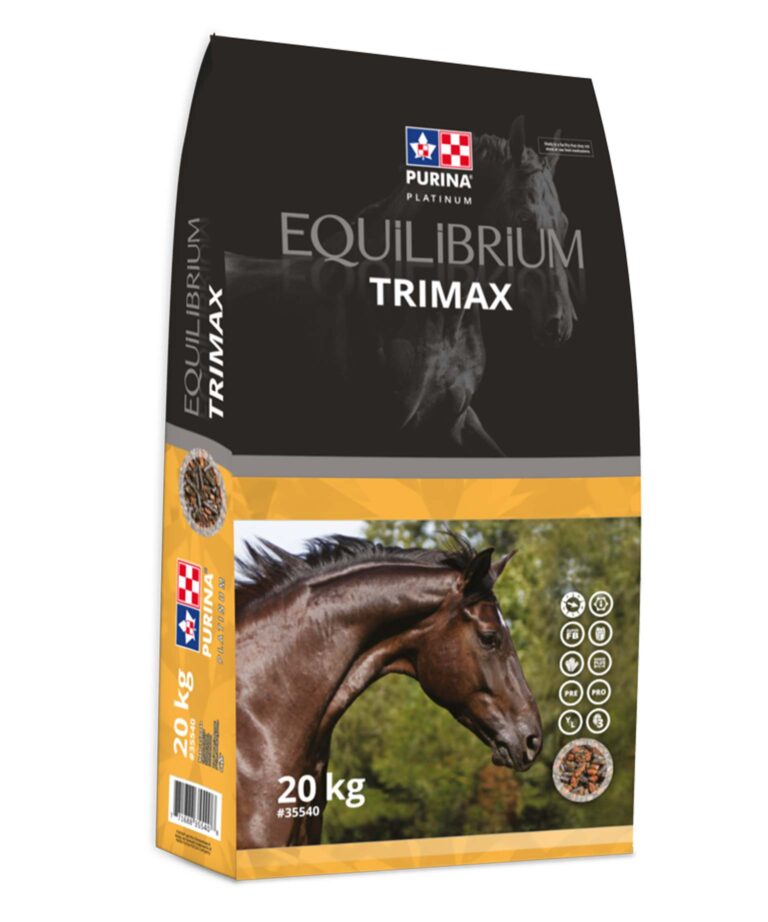
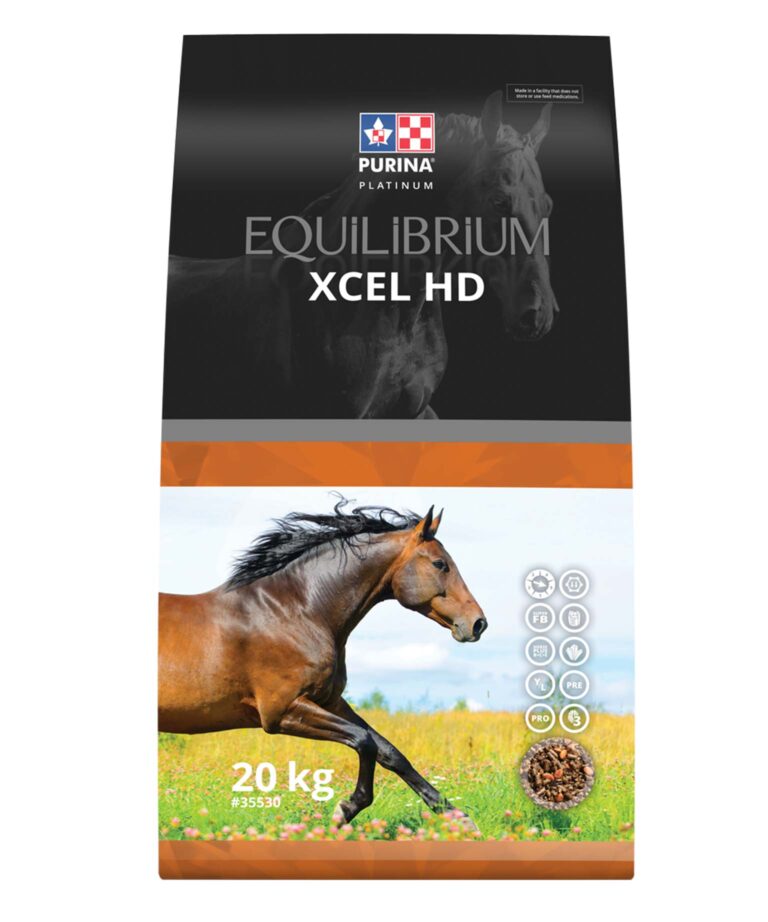
For equine athletes, Equilibrium Trimax and Equilibrium XCEL HD are excellent moderate‑ and low‑NSC feeding options, respectively. Both are high‑calorie, high‑fat, and rich in omega‑3 fatty acids, making them well suited for horses requiring energy density without excessive starch.
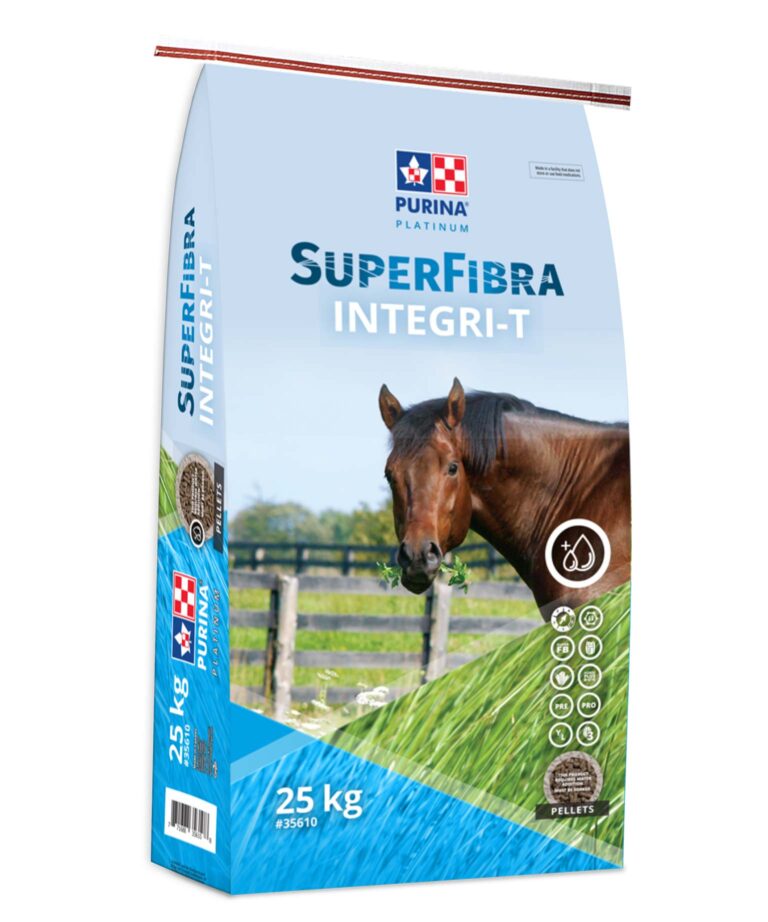
In acute situations—when horses are resting and calorie intake must be reduced—Super Fibra Integri‑T, with an NSC value of approximately 10 %, is an ideal choice.
Balancing vitamins, minerals, and amino acids is also essential. A low‑NSC ration balancer such as Optimal or Equilizer helps meet nutrient requirements without adding unnecessary calories or starch.
Horses experiencing elevated stress due to discomfort or medication may benefit from digestive support. A low‑NSC gastric supplement such as Digestive Balance, which contains post‑biotics, can provide valuable assistance. Additional pre‑ and probiotics may offer further benefit, and Horse Shield, in RER cases, can be incorporated as part of a comprehensive program. Another consideration is a broad‑spectrum B‑vitamin supplement, such as Horse Plus, which may help support horses experiencing elevated stress and contribute to hindgut health.
Final Takeaway
Not all muscle soreness is tying‑up, and not all tying‑up is the same. The greatest challenge lies in correctly identifying the underlying muscle disorder—whether sporadic ER, EPSM, or RER.
Once identified, success depends on implementing a multifaceted approach that combines consistent exercise, stress management, and precision nutrition. With proper management, many horses prone to tying‑up can return to athletic work and enjoy long, productive careers.
For individualized guidance, connect with your local Purina Equine Consultant to build a program that supports muscle health, performance, and long-term well-being.
References Valberg.,S J., Muscling in on the Cause of Tying-Up, AAEP Proceedings 2012, v. 582012, p.85 – 123. Valberg.,S.,Tying up Syndrome, mastersonmethod.com/fieldwork/wp content/uploads/Tying_UP1.pdf, 2001.,University of Minnesota.