
Raising a Healthy Foal Starts Before Birth: Nutrition Tips for Broodmares, Foals and Weanlings
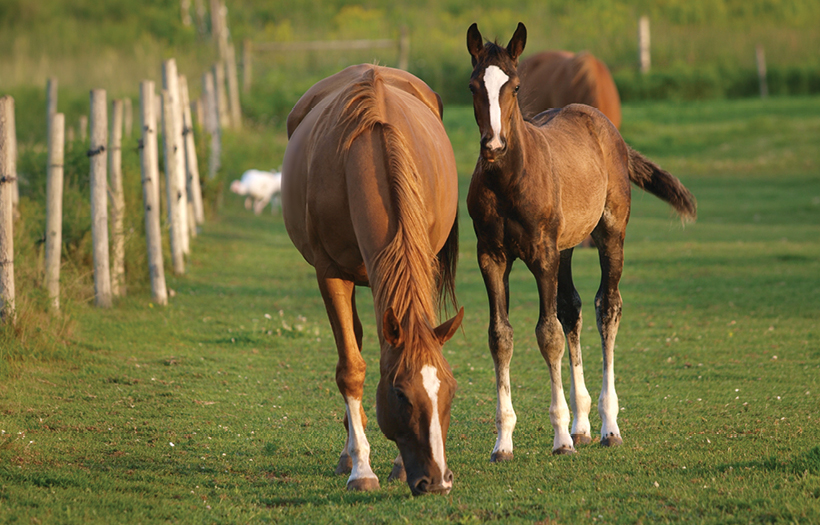
What You Need to Know About Broodmare Nutrition, Foal Growth and Development from Gestation Through Weaning
With every new foal comes a new set of dreams. Whether you’re breeding for sport, performance, or simply hoping to raise a healthy and happy horse, nutrition plays a critical role long before that foal takes its first steps.
Many horse owners focus on feeding the growing foal, but the reality is that proper growth starts during pregnancy. The mare’s nutrition directly influences fetal development, colostrum quality, milk production, and ultimately the health and growth of her foal. Research and practical experience continue to show that developmental orthopedic diseases (DOD) are influenced by multiple factors, with nutrition remaining one of the most manageable. In this article, we’ll explore how nutrition impacts the broodmare, the developing foal, and the weanling, along with practical feeding strategies to support healthy growth from conception through the first year of life.
Table of contents
- What You Need to Know About Broodmare Nutrition, Foal Growth and Development from Gestation Through Weaning
- What Is Developmental Orthopedic Disease (DOD)?
- Why Does Broodmare Nutrition Matter?
- Why Is Body Condition So Important During Pregnancy?
- Why Is Protein Quality More Important Than Protein Percentage?
- Why Are Vitamins and Minerals Essential for Foal Growth?
- Why Should Broodmares Receive Omega-3 Fatty Acids?
- Foal Growth Begins Before Birth
- The Nursing Foal: A Critical Transition Period
- What Is Creep Feeding and Why Is It Important?
- How Can You Support Foal Growth Without Restricting It?
- Why Is Weaning Such an Important Nutritional Stage?
- Practical Feeding Tips for Breeders
- The Bottom Line
- Recommended Products
What Is Developmental Orthopedic Disease (DOD)?
Developmental Orthopedic Disease, commonly called DOD, refers to a group of skeletal disorders that affect growing horses.
These conditions can include:
- Osteochondrosis (OCD)
- Epiphysitis
- Cervical vertebral malformation (Wobbler Syndrome)
- Angular limb deformities
- Flexural deformities (contracted tendons)
While no single cause has been identified, DOD is generally considered multifactorial. Genetics, growth rate, exercise, hormonal influences, management practices, and nutrition can all play a role.
One of the most common misconceptions is that DOD is caused simply by feeding too much protein. In reality, research has not demonstrated that properly balanced high-protein diets cause skeletal problems. More often, issues arise when growth is not supported by adequate levels of the nutrients required for proper bone development.
The goal should never be to slow growth by underfeeding a foal. Instead, the objective is to support steady growth with a balanced diet that provides the right nutrients in the right proportions.
Why Does Broodmare Nutrition Matter?
Healthy foals begin with healthy mares.
Throughout breeding, pregnancy, and lactation, maintaining appropriate body condition is one of the most important nutritional goals. Purina recommends keeping broodmares around a body condition score of 6, where ribs can easily be felt but are not visible. Mares that become too thin may experience reproductive challenges, while overweight mares can develop metabolic issues that may negatively impact both mare and foal.
Providing a broodmare-specific feed can help simplify nutritional management throughout pregnancy and lactation. Purina Evolution Maternity is formulated to provide the quality protein, energy, vitamins, and minerals needed to support both the mare and her developing foal during these critical stages.
Why Is Body Condition So Important During Pregnancy?
As pregnancy progresses, the mare should maintain a consistent body condition.
Significant weight loss often indicates insufficient calorie intake for both the mare and her growing foal. Excessive weight gain can also create challenges, particularly during late gestation.
The final trimester deserves special attention because this is when fetal skeletal growth accelerates rapidly. In fact, the majority of fetal bone development occurs during late pregnancy. As nutrient requirements increase during late gestation and early lactation, providing a balanced feeding program becomes even more important. Feeds specifically formulated for broodmares, such as Purina Evolution Maternity, help deliver the nutrients required to support fetal development, colostrum quality, and milk production.
Why Is Protein Quality More Important Than Protein Percentage?
When evaluating broodmare diets, focus on amino acid quality rather than simply crude protein levels.
Important amino acids such as lysine and methionine support:
- Fetal development
- Colostrum quality
- Milk production
- Muscle maintenance in the mare
Poor topline development in mares is often an indicator that protein quality, rather than quantity, may need attention.
Why Are Vitamins and Minerals Essential for Foal Growth?
During late gestation and lactation, requirements for minerals increase significantly.
Particular attention should be paid to:
- Calcium
- Phosphorus
- Copper
- Zinc
- Selenium
- Vitamins A, D and E
Forages vary tremendously in mineral content, which is why hay analysis is such a valuable management tool. Many hay-based diets require additional vitamin and mineral fortification to meet the needs of broodmares.
The balance of minerals is just as important as the absolute amount provided.
General guidelines include:
- Calcium to phosphorus ratio near 2:1
- Zinc to copper ratio between 3:1 and 4:1
Copper deserves special attention because it plays a critical role in connective tissue development and is transferred to the foal through the mare’s diet.
Why Should Broodmares Receive Omega-3 Fatty Acids?
Omega-3 fatty acids support several important functions throughout reproduction and early development, including:
- Fertility
- Fetal development
- Immune function
- Neurological development
Providing Omega-3 sources throughout pregnancy and lactation is a valuable component of a comprehensive feeding program.
Foal Growth Begins Before Birth
The nutritional management of DOD prevention starts before birth.
By the time a foal is born, it has already achieved approximately:
- 10% of its mature body weight
- 60% of its mature height
That means significant skeletal development has already occurred before the foal ever reaches the ground.
A mare receiving balanced nutrition during late gestation helps support proper bone mineralization and fetal development at a stage when nutrient demands are rapidly increasing.
Think of late gestation as building the foundation of a house. If the foundation is strong, everything that follows becomes easier.
The Nursing Foal: A Critical Transition Period
For the first few weeks of life, the mare’s milk provides most of the nutrients a foal requires.
However, that changes quickly.
By approximately two months of age, milk alone can no longer meet the foal’s nutritional requirements. At this point, supplemental nutrition becomes necessary to support continued growth and development.
As nutrient requirements increase during late gestation and early lactation, providing a balanced feeding program becomes even more important. Feeds specifically formulated for broodmares, such as Purina Evolution Maternity, help deliver the nutrients required to support fetal development, colostrum quality, and milk production.
What Is Creep Feeding and Why Is It Important?
A creep feed is a specially formulated feed offered exclusively to the foal in an area where the mare cannot access it.
A good creep feed should:
- Be specifically formulated for growing horses
- Provide concentrated vitamins and minerals
- Offer highly digestible nutrients
- Support bone, muscle, and cartilage development
Because some foals consume relatively small amounts initially, nutrient density becomes extremely important.
Pelleted or extruded feeds are often preferred because they help prevent ingredient sorting. With textured feeds, foals may consume primarily grains while leaving behind the nutrient-rich fortified portions.
A nutritionally balanced creep feed helps bridge the gap between what the mare’s milk can provide and what the growing foal requires. Products such as Purina Evolution Juvenile are formulated to deliver concentrated nutrition appropriate for young, developing horses.
How Can You Support Foal Growth Without Restricting It?
One of the biggest mistakes breeders can make is assuming slower growth automatically prevents DOD.
Underfeeding a growing foal does not eliminate developmental orthopedic concerns. Instead, it can create a young horse that is both underdeveloped and nutritionally deficient.
Rather than restricting growth, breeders should focus on:
- Consistent growth rates
- Appropriate body condition
- Balanced nutrient intake
- Proper vitamin and mineral supplementation
Rapid growth becomes problematic primarily when the supporting nutrients required for skeletal development are insufficient.
Providing a balanced growth feed is one way to help meet these nutritional goals. Purina Evolution Juvenile is formulated to support steady growth by providing the appropriate balance of calories, protein, vitamins, and minerals needed by growing horses.
Why Is Weaning Such an Important Nutritional Stage?
Weaning is one of the most stressful periods in a young horse’s life.
During this transition, the foal experiences:
- Separation from the mare
- Environmental changes
- Social adjustments
- A complete dietary shift
This combination of nutritional and management stress makes proper feeding particularly important.
By 12 months of age, many horses have already reached approximately:
- 60% of mature body weight
- 90% of mature height
- 95% of their eventual bone growth
Following weaning, growth continues at a remarkable pace and nutrient requirements remain high. Continuing with a growth-focused feeding program that includes Purina Evolution Juvenile can help support proper skeletal development, muscle growth, and body condition throughout this important stage.
This highlights why the first year of life is so important for long-term soundness and performance.
Practical Feeding Tips for Breeders
- Maintain broodmares at an appropriate body condition score throughout pregnancy and lactation.
- Prioritize amino acid quality, not just crude protein levels.
- Balance calcium, phosphorus, copper, and zinc.
- Consider hay analysis to better understand forage contributions.
- Introduce a properly balanced creep feed when foals are young.
- Monitor growth monthly using body weight, weight tape measurements, and body condition scoring.
- Provide free-choice salt at all times, and consider including approximately 50 g of salt daily in the ration of an average 1,000 lb (454 kg) broodmare. Proper hydration is essential for all horses, and especially important for broodmares. Trace mineral blocks are primarily composed of salt and should not be relied upon as the sole source of minerals.
- Avoid making major nutritional decisions based on feed protein percentages alone.
The Bottom Line
From gestation through the first year of life, every stage plays an important role in a horse’s future health and development. By combining quality forage, balanced nutrition, regular growth monitoring, and feeds specifically formulated for broodmares and growing horses, such as Purina Evolution Maternity and Purina Evolution Juvenile, breeders can provide the nutritional foundation needed to help young horses reach their full potential.
It is equally important to understand feeding recommendations and ensure the ration continues to meet the horse’s nutritional requirements. When a complete feed is fed below recommended levels, whether due to body condition management goals or the availability of higher-quality forage, key nutrients may fall below requirements. In these situations, a ration balancer such as Purina Equilibrium Optimal can help provide the vitamins, minerals, and amino acids needed to maintain a balanced diet.
Your local Purina Equine Consultant can help evaluate your feeding program, analyze forage quality, and determine whether additional nutritional support is needed to help both mare and foal thrive.
After all, every future champion starts as a foal, but every healthy foal starts with a well-fed mare.
Recommended Products
- Purina Evolution Maternity: Designed to support broodmares during gestation and lactation.
- Purina Evolution Juvenile: Formulated for growing horses from the nursing stage through development.
- Purina Equilibrium Optimal: A ration balancer that helps provide key vitamins, minerals, and amino acids when feeding below recommended levels or when forage quality is lacking.