Feeding the Broodmare

There’s nothing quite like welcoming a new foal into the world. After months of planning, stress, and expense, seeing a healthy foal take its first breath makes it all worth it. While many aspects of breeding are out of our control, one thing we can manage is nutrition — and good nutrition can prevent a surprising number of problems.
Table of contents
Keeping Body Condition on Track
From breeding all the way through pregnancy and lactation, the goal is to keep your mare at a body condition score of around 6 — ribs easy to feel but not visible.
• Too thin? Her body shifts into “survival mode,” making reproduction the last priority.
• Too heavy? That can trigger hormone imbalances and reduce fertility.
During pregnancy, keeping her condition steady is key. Weight loss means she’s not getting enough calories for herself or her growing foal. On the flip side, an overweight mare may become insulin resistant, increasing the risk of bone-development issues like OCD, which often begins before birth.
During lactation, her energy needs jump dramatically — similar to a racehorse! Most mares need around 2 kg of extra feed per day during early lactation, though breeds can differ somewhat. The goal isn’t to make her gain weight, just to maintain what she has.
Protein: Quality Over Quantity
Protein isn’t just about the percentage on the feed tag — it’s about amino acids, especially lysine and methionine, which are often the limiting factors for broodmares. If these aren’t adequate:
• During pregnancy: Foal development may be compromised.
• During lactation: Milk production can drop.
A helpful indicator of protein adequacy is her topline. Poor muscling usually means the protein source isn’t cutting it. This also affects her ability to comfortably carry the foal’s weight.
Minerals & Vitamins: Small But Mighty
Micronutrients matter at every stage — conception, pregnancy, and lactation — but the mare’s needs shift over time.
A few key points:
• Hay-only diets almost always require at least a complete vitamin and mineral supplement or ration balancer, especially for selenium and vitamins.
• It can take up to three months to correct deficiencies that impact fertility.
• During the last 5 months of pregnancy, requirements for calcium and phosphorus spike as the foal’s skeleton develops.
• Lactating mares lose a lot of minerals and vitamins through milk.
Look for chelated minerals (e.g., zinc methionine, selenium yeast). They’re much more bioavailable than oxide or selenite forms — and they transfer better to both placenta and milk.
Other Things to Watch
• Hay with endophyte-infected tall fescue can disrupt hormone balance.
• Grains (oats, barley, corn) can contain mycotoxins that may cause diarrhea, irregular cycles, abortions, or foaling complications. Testing is worth the peace of mind.
What About Omega-3s?
Omega 3s support everything from fertility to fetal development to foal learning ability. They’re beneficial from conception right through lactation.
Basic Feeding Guidelines
Early Pregnancy (first 7 months) – Aim for a body condition score of 6
- Some managers stick with the same feed their mare was on before. But introducing a broodmare-specific product—at the right amount—can give her steady support all the way through pregnancy.
- Add minerals/vitamins as needed for early gestation to mid-gestation.
Last Trimester (final 3 months) – Aim for a body condition of 6-6.5
- Transition to a lactation feed if you aren’t already using a broodmare product, and if you are, follow the recommendations for feeding the mare during late gestation and lactation.
- • Adjust vitamin, mineral and amino acid profile to appropriate levels.
- • Ensure a calcium/phosphorous ratio around 2:1.
Lactation
- Increase calorie intake on average 2 kg of feed per day; always considering the mare’s body condition and milk production.
- Increase the vitamin and mineral intake, aiming for a 2:1 calcium/phosphorus ratio and a 4:1 zinc/copper ratio.
- Increase protein to support milk production.
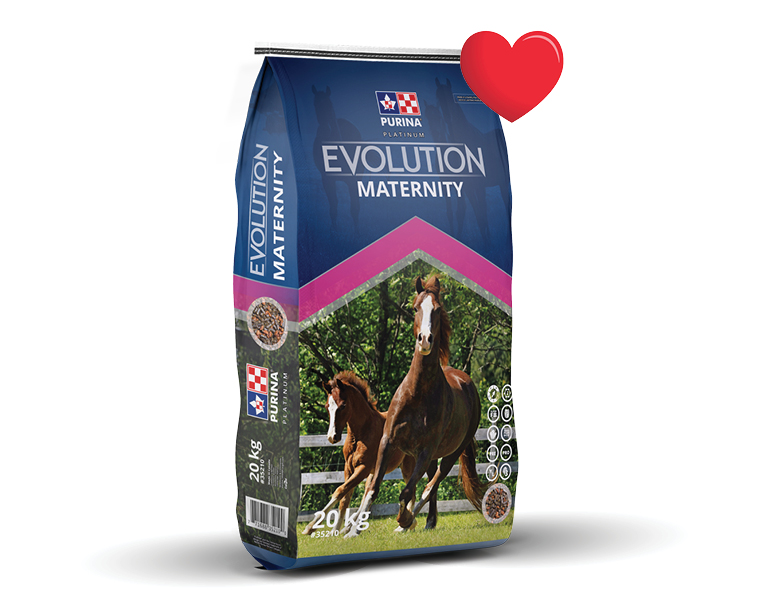
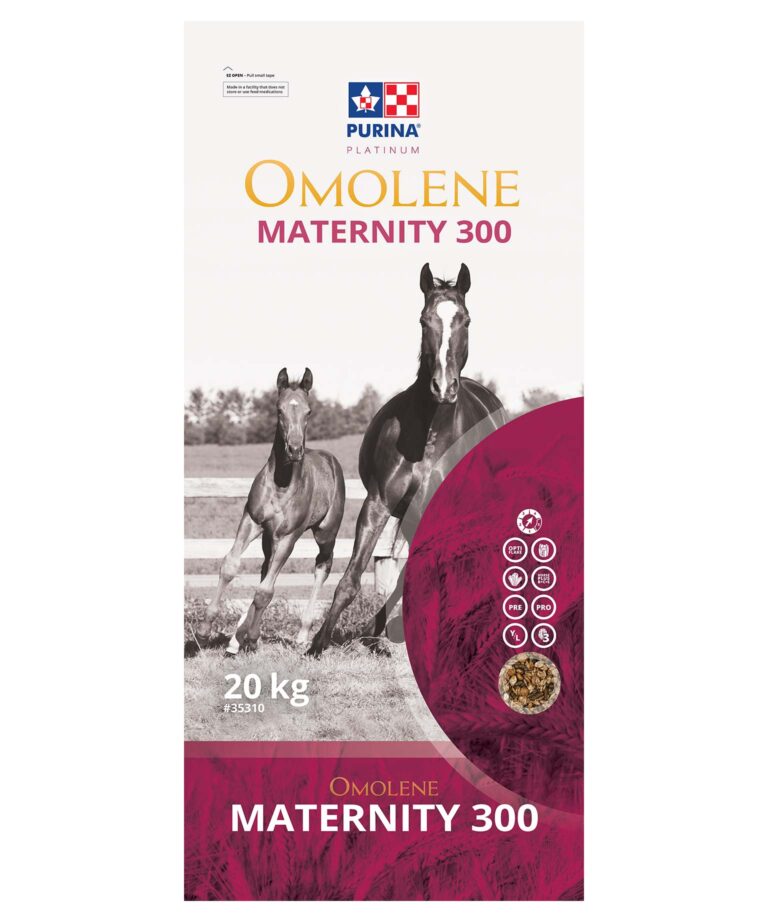
Consult with your local Purina Equine Consultant to help you establish a customized feeding program for your mare. All these variables are much easier to work through with a ration‑balancing program. We also highly recommend conducting a hay analysis, since it makes up a major portion of the mare’s diet. This information will help you choose the right broodmare feed—such as Evolution Maternity, Omolene 300, or Legend XT—for your mare.