Why Egg Production Drops in Winter—and What You Can Do About It
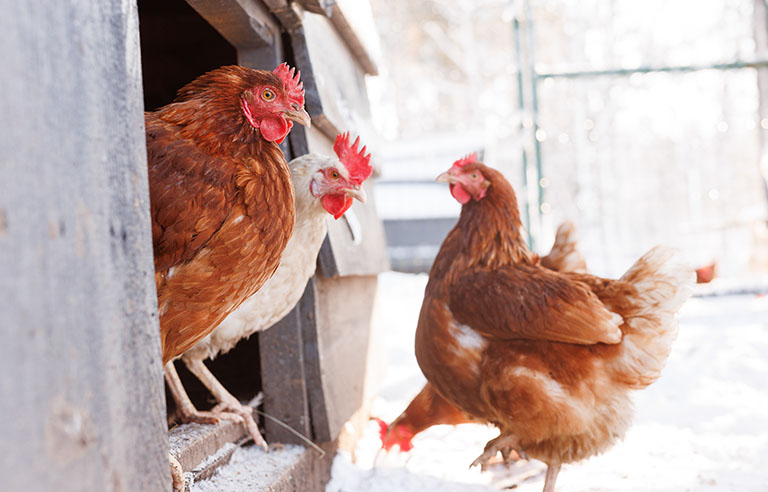
As the days get shorter and your flock finishes molting, you might notice fewer eggs in the nest boxes. Wondering if that’s normal? Absolutely—it’s a natural part of the seasonal cycle.
Chickens need about 16 hours of light each day to maintain steady egg production. While some enthusiastic first-year hens may keep laying through winter, most will slow down. Shorter daylight hours combined with cold temperatures mean birds use more energy to stay warm, leaving less for egg production.
Table of contents
Nutrition Still Matters—Even When Eggs Are Scarce
Just because laying slows down doesn’t mean your flock needs less nutrition. A high-quality, energy-rich feed like Purina® Gold’N Layena® Feather Plus, is essential to maintain body condition, support winter egg production, and ensure your birds are in top shape when spring arrives.
Avoid cutting corners with cheap feed or relying on scratch grains. Scratch should never make up more than 10% of the diet—or only what they can finish in about five minutes. Birds fed poor diets often struggle through winter and look rough by spring.
Don’t Forget Grit
Snow and mud can make natural grit hard to find, so keep grit available throughout the winter. It’s a small step that makes a big difference in digestion and overall health.