Getting the most Eggs from Your Hens This Winter
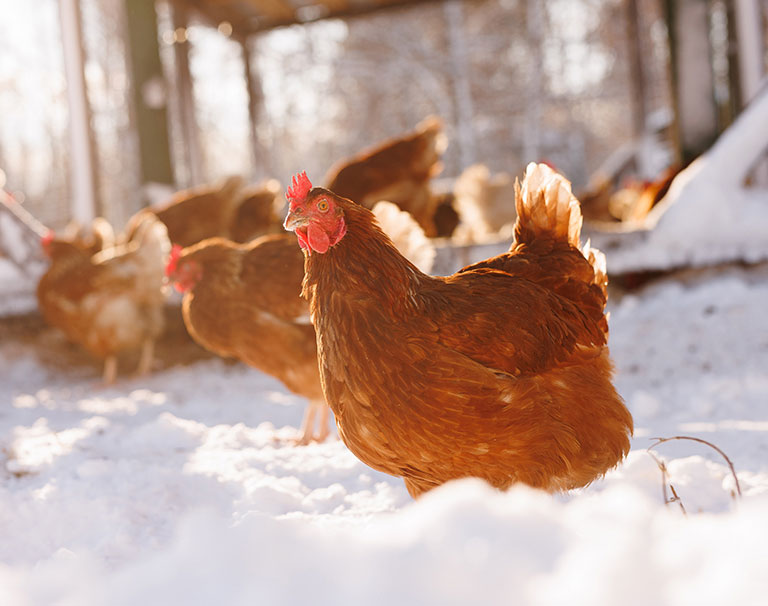
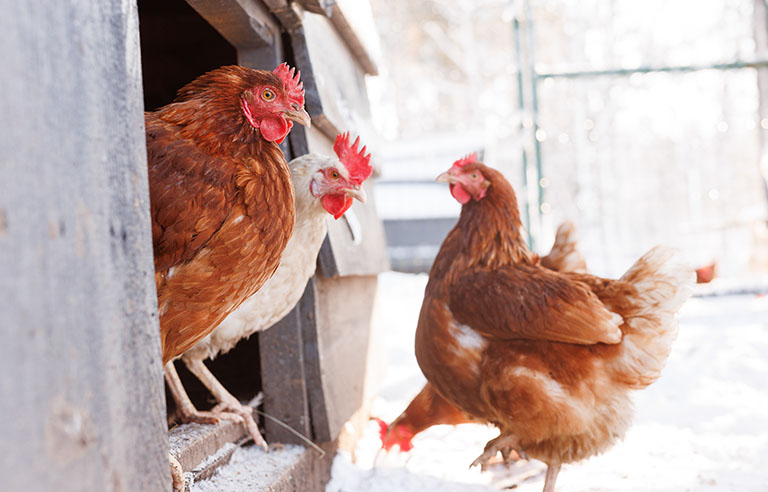
Winter is in full swing, and while we’re counting down the weeks until spring warmth returns, your hens are working hard in the cold. Shorter days and chilly temperatures can make egg production a challenge— but with a few smart strategies, you can keep your flock healthy, happy, and laying strong until the snow melts.
Table of contents
Egg Care: Keep Those Eggs Safe
- Collect often: Check nest boxes early and throughout the day. Frequent collection helps prevent freezing and cracking.
- Winterize nests: Place nest boxes inside the coop, line them with deep bedding like pine shavings or chopped straw, and add heavy cloth curtains (e.g., wool) for warmth.
- For insulation, cut cardboard panels to fit the nest box sides, top, and bottom—avoid using commercial insulation materials; chickens may peck and eat them.
- Handle cracked eggs wisely: If only the shell is broken and membranes are intact, wash and use immediately. If membranes are damaged, discard the egg. Never feed broken eggs to hens (it can encourage egg‑eating).
Beat Boredom: Mental & Physical Health
- Scatter a small amount of scratch grains in bedding to encourage natural foraging.
- Hang a cabbage from the run ceiling for peck‑and‑play enrichment.
- Use suet baskets (without suet) and tuck in lettuce or veggie treats for a safe challenge.
Coop Comfort: Winterizing Tips
Chickens tolerate cold, but sudden temperature drops are stressful. Aim for steady conditions and targeted warmth.
- Add extra bedding to help birds conserve heat.
- Provide heated perches for cozy roosting.
- Keep the coop well ventilated to remove moisture (which chills birds).
- Eliminate drafts—especially around roosts—where birds sleep.
- Cover parts of the coop and run with tarps or heavy plastic (not blankets).
- If you use heat, keep it minimal—just enough to raise temperatures by about 5–6°C above outdoor temperature. Heat only part of the coop so birds can choose their comfort zone.
- If using a bulb, place it in a safety cage and remember any heat source is a potential fire hazard—use caution and proper fixtures.
Light Matters
Hens lay in response to photoperiod—the hours of light per day. For peak laying, target about 14 hours of light and do not exceed 16 hours. Consider a timer‑controlled bulb for early mornings, or let nature give them a winter break—both approaches are acceptable.
Water: Don’t Let It Freeze
- Because birds and their eggs are mostly water, even slight dehydration can push hens out of lay.
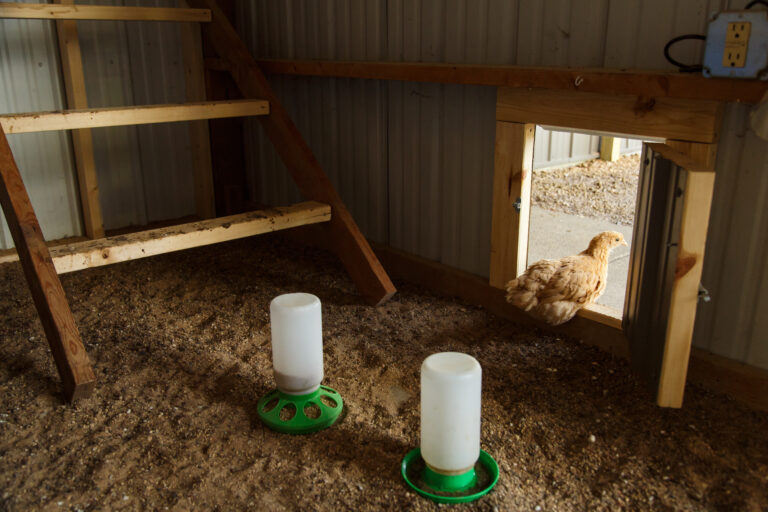
- Heated waterers are ideal, but they typically require an electrical outlet or a safe, weather‑rated extension cord.
- If heated waterers aren’t an option, rotate waterers—place a fresh one outside while another thaws indoors.
Feed for Success
Winter means higher energy needs. Keep feed available at all times and choose a balanced ration with pre‑ and probiotics, yeast culture, essential oils, and vitamin D3 to support feather health during molt and year‑round egg production. Your birds will eat a bit more in winter—keep feeders topped up.
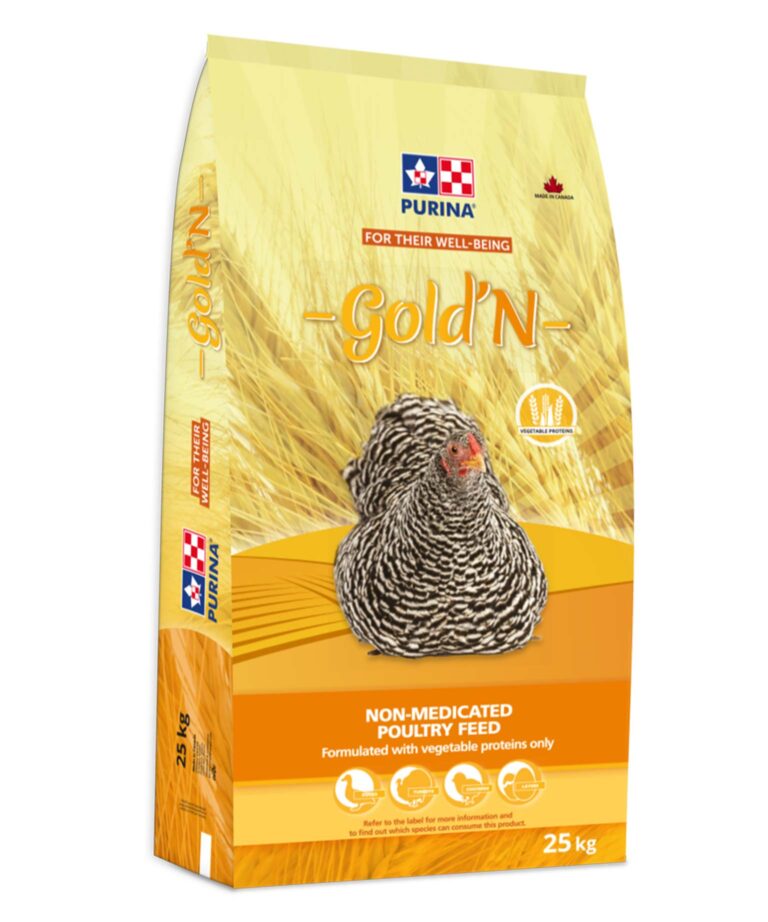
Recommended product: Purina® Gold’N Layena® Feather Plus—formulated to help keep hens healthy, happy, and laying through the last stretch of winter.